Updated:
31.8.2026
Getting paid on time can sometimes be the hardest part of the tradie business. There’s no better feeling than getting paid, and no worse one than finishing the job and still waiting on the money. The good news is you can set yourself up for it well before you pick up a tool, if you’ve got the right process in place. Here’s how it works on Builderscrack.
Get your quote and contract right
Send your quote through BC. It keeps everything in one thread, creates a written record of what’s been agreed, and protects you if anything is questioned later. The homeowner can accept, query, or decline directly in the thread, and the accepted price is recorded on the job. For conversations that take place over the phone, via text or in person, be sure to record the agreed cost through BC.
If you’re breaking a bigger job into stages, state it in the same quote:
- A deposit
- A progress payment(s)
- A final payment
It still sits in that same written thread, so both sides can see exactly what was agreed and when each amount is due.
For residential building work valued at $30,000 or more including GST, a written contract is a legal requirement in NZ. If your job sits in that range, make sure you have one in place before work starts. Even if it’s less than that figure, it’s still good practice to ensure you have written contracts and processes in place to record what has been agreed.
Itemise every quote
A vague quote leaves too much room for a homeowner to question the final bill. For straightforward work, a simple breakdown is enough. For bigger or more complex jobs, go further. Either way, a well-itemised quote covers:
- Labour
- Materials
- Start date, or a task-by-task breakdown for bigger jobs
- Who’s doing the work
- Your payment terms
Getting this right isn’t just about looking thorough; it’s what stops confusion or hesitation when it comes time for final payment. A homeowner spending serious money wants to feel they understand exactly what they’re agreeing to, and a quote that gives them that clarity is already ahead of most.
Update the quote when the job changes
Scopes change: maybe you opened up the walls and found rot, or the client wanted an extra power point added halfway through. A homeowner who understands the costs involved because of a written variation is far more likely to accept the new cost than one who gets hit with bill shock at the end.
On BC, use the re-cost feature for minor adjustments and re-quote for anything bigger. Both are accessed from your archived jobs list, and both keep the price change in the same written record as everything else. Always send a message alongside explaining why the price has moved, and raise it as soon as you know about it, not at the end of the job.
If you want the full picture on getting quotes right in the first place, that’s covered in Quoting on BC: what actually wins the job.
Know who you’re working for, and trust your gut
Everyone loves picking up new work, but it’s important to assess whether the homeowner can actually pay you. If you’re subcontracting to another tradie, ask to see their licences and insurance details, or check which professional bodies they’re part of. It’s fair to check their reviews too, the same way a homeowner checks yours, and Builderscrack’s reviews work in your favour here.
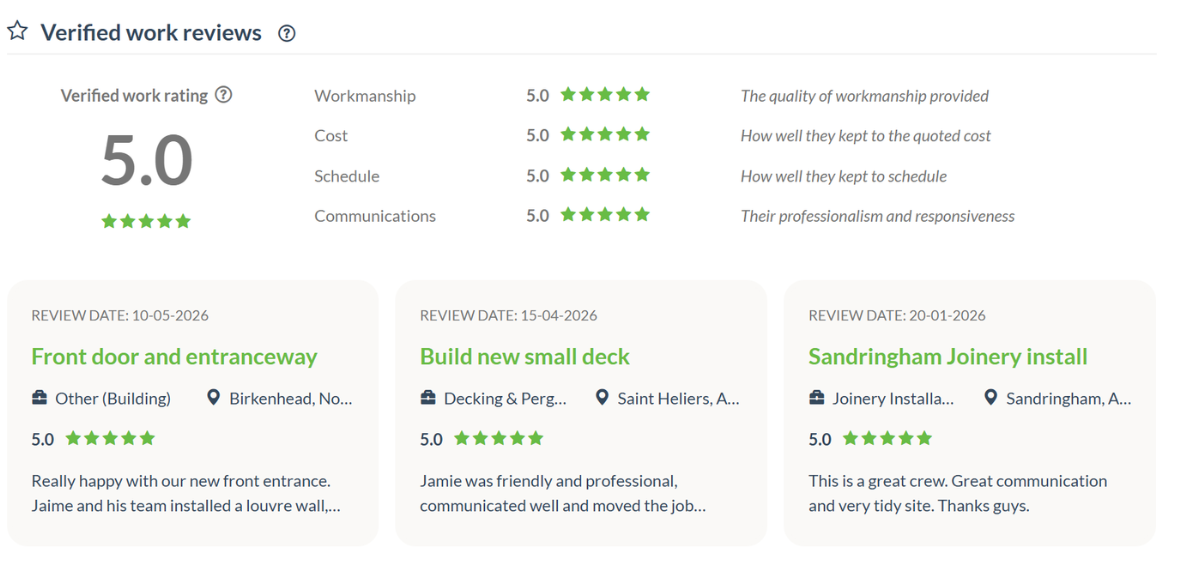
Verified work reviews on Builderscrack. Rated across work quality, cost, schedule and communications.
If a job doesn’t feel right before it’s even started, that feeling is worth listening to. It might save you money and angst in the long run if you can say no to a homeowner who isn’t the right fit.
Build good relationships
Being on good terms with homeowners is a huge part of getting paid on time. It might sound silly, but people are less likely to want to string you along if you’ve built a respectful, professional relationship. A homeowner who feels like they’ve been kept in the loop, who’s had their questions answered, is a homeowner who pays without being chased. Keeping communication on BC does double duty here: it’s a good habit for the relationship, and it keeps the written record intact at the same time.
Deal with pushback on your payment terms
Every so often you’ll get a homeowner who isn’t happy with the payment terms you’ve offered. It often comes through indirectly, as a suggestion rather than a straight-out request:
- Can we pay a different way?
- Could the deposit be smaller?
- Is there any flexibility on the due date?
Whether it’s worth negotiating depends on the job. If you’re doing three or four jobs a day, renegotiating terms every time isn’t worth your while. But if it’s a job that’ll run for six months, there might be more room to move.
You don’t have to say yes. If a homeowner pushes back on terms you’ve already put in writing, it’s fine to be polite and still say no. Keeping it simple works: “I need to keep those terms as they are. It’s how I keep the business running smoothly and jobs on schedule.” You’re not being difficult, you’re protecting the same written agreement that protects them too.
Set reminders before payment’s due
You don’t need fancy software to stay on top of this, just a habit. A quick message a few days before payment’s due, referencing the terms you already agreed, keeps it front of mind for the homeowner and doesn’t come across as chasing. It also means if a payment is late, you’ve got a clear paper trail of when it was raised and when it was due.
If a payment is late
Try to call the homeowner first to discover what the reason is for non-payment. Yes, it can feel awkward, but get straight to the point and address any issues around the bill, whether it’s cash flow issues or confusion over what the final amount is to pay.
Keep the good habits going once the job’s done
The sooner you send the invoice once the job wraps, the sooner you’re likely to get paid. Leave it a week and it’s not front of mind for the homeowner anymore. Depending on the size of the job, you could consider getting a payment terminal for onsite card payment.
It starts before the job
Getting paid on time isn’t really about what you do when a payment’s late. It’s about what you wrote down before the job started, and how you handled it if things changed along the way. Send the quote properly, keep it updated, and you’ve already done most of the work of protecting your income, before you’ve picked up a single tool.