Updated:
7.7.2026
You’re mid-job and your phone goes off. A text, then a call. Homeowners have never had bigger expectations around communication, and it’s not hard to see why. We live in a world where you can order groceries and have them at your door in 90 minutes, Uber eats to your door in 20 minutes, and have money in someone’s account before you’ve put your phone down.
What they don’t always clock is that being on the tools means you’re in someone’s home, focused on the job they’re paying you to do. You can’t just stop to answer a call. And when you’re on their job, they’d want the same.
Here’s how to manage it without it managing you.
Set expectations before the job starts
Not every homeowner has worked with a tradie before. They might not know that you can’t take calls mid-job, that you might be on a remote site with patchy reception, or that a missed call doesn’t mean you’ve gone quiet on them.
Spend a bit of time upfront explaining how you work. Let them know the best time to contact you, when you won’t be available (“my work phone gets switched off after 8pm” is a simple way to phrase it), and whether a call or text works best for different situations.
Think through the questions a homeowner is likely to have before the job starts: timing, what’s included, what happens if something unexpected comes up. Address them before they need to ask.
On Builderscrack, communication starts before contact is even granted. When you chase a job, you have the option to send a chase Intro, a short structured form covering things like your availability for a site visit, how long you estimate the job will take, and whether a call-out fee applies. It appears at the top of your profile when the homeowner is deciding who to connect with. Here’s how a Chase Intro works.
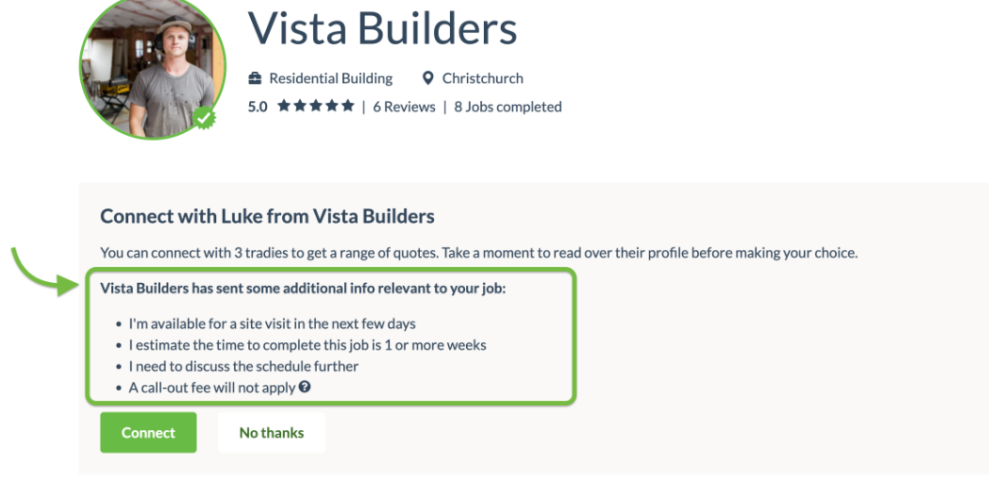
How a Chase Intro appears to a homeowner on BC before they decide who to connect with.
Put key details in writing
Before work starts, make sure everything is clearly agreed and signed off. Whether it’s a quote or a contract, this includes terms and conditions, exclusions, expectations around deposits and final payment dates, and anything else that could become a point of dispute later.
For residential building work valued at $30,000 or more including GST, a written contract is a legal requirement in New Zealand. But it’s good practice to have something signed off regardless of the job size. A written agreement is critical to resolving any potential conflict and necessary if you need to chase up late payment.
On BC, sending your quote through the platform keeps everything in one thread. Agreed scope, pricing, start dates, and any changes all sit in one place that both you and the homeowner can refer back to. If a homeowner later questions what was agreed, the thread is right there. For more on writing a quote that wins the job, read our quoting guide.
Call them first
Homeowners aren’t sitting back waiting. If they haven’t heard from you, they’re wondering what’s going on. Getting in first is always better than waiting to be chased.
For big projects, sending a short picture or video via text of the job in progress, or during any big milestone event like a frame going up, concrete being poured or a roof going on, can make them feel like they’re being regularly updated.
It’s also critical to call the homeowner if you’re expecting any change to the job, especially a delay or a problem on site. A homeowner who hears about an issue from you, early and with a plan attached, responds very differently to one who finds out late or not at all. Make sure to follow up with any variations of scope in writing so you can get agreement also in writing before moving on.
Respond quickly, even when you can’t talk
If you’re really busy and clients keep calling, consider setting up an automated response on your phone or email with a simple message like:
“Thanks for getting in touch. I’m on the tools right now but I’ll get back to you during business hours, Monday to Friday. Thanks for your patience.”
It acknowledges the homeowner, sets a clear expectation, and saves you from having to respond individually every time. If you’d rather keep it manual, save a short template on your phone you can send in a few seconds. Either way, something is almost always better than silence.
Keep your promises
Once you’ve told a homeowner when you’ll get back to them, get back to them. One of the biggest communication missteps is promising something you can’t deliver, even something as small as a return call.
Be realistic about timelines, delivery dates, and delays. Wet weather, material holdups, and unexpected site issues are part of the job. What isn’t part of the job is letting a homeowner find out about them after the fact. Not following through impacts the client relationship, affects your reputation, and causes everyone unnecessary stress.
How communication feeds your reviews on Builderscrack
Every job on BC is a reputation moment. Homeowners can leave a verified communication review even on jobs you weren’t hired for. That means how you respond at the quoting stage, how you handle a delay, and how you close out a job are all feeding your reputation, whether you realise it or not.
Once the job’s done, BC automatically prompts the homeowner to leave a review. You don’t need to do the awkward ask. Every BC review also sits in a 7-day pending window before it goes public. You see it before anyone else does. If you respond within that window, your reply publishes at the same time as the review.
What gets written in that review reflects everything that came before it. Clear, proactive communication throughout the job is the best thing you can do to make sure it’s a good one.